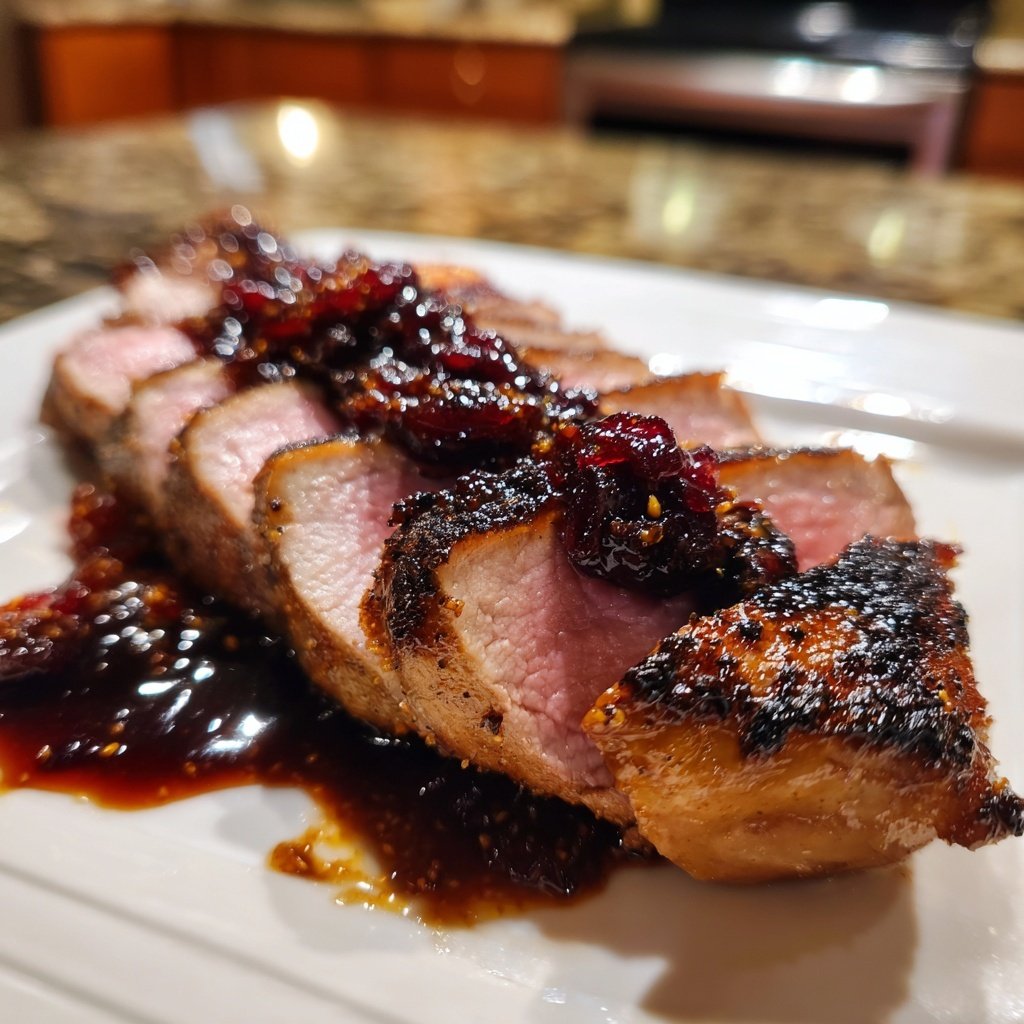
Duck Breast with Fig and Red Wine
Highlighted under: World Taste Studio
Duck Breast with Fig and Red Wine
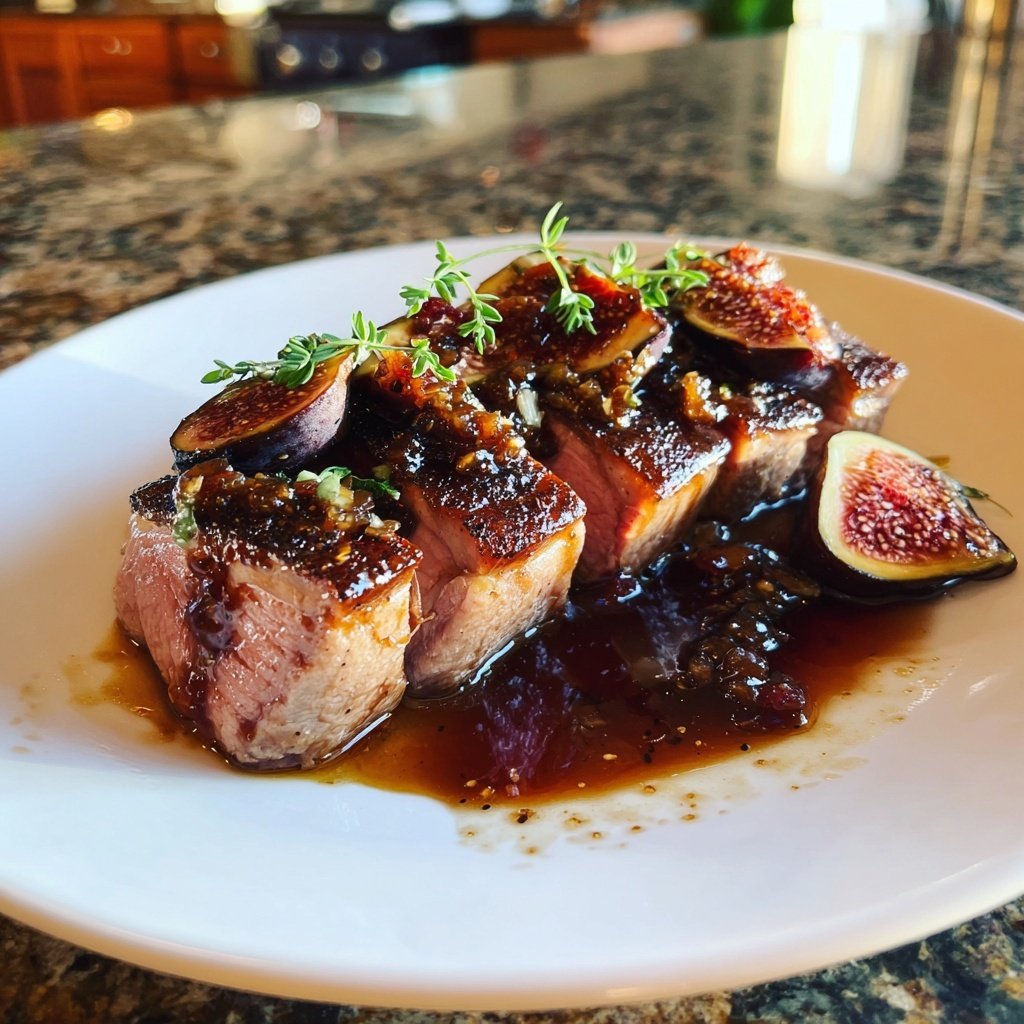
Duck Breast with Fig and Red Wine
Duck Breast with Fig and Red Wine
The Perfect Duck Breast Technique
Cooking duck breast can be tricky, but the key is to render the fat slowly. Start by scoring the skin in a crisscross pattern without cutting into the meat underneath. This method allows the fat to escape, resulting in crispy skin. Place the duck breast skin-side down in a cold skillet over medium heat; this will help render the fat as the skillet heats up. Aim for around 8-10 minutes of cooking time, until the skin is a deep golden brown and crispy. Flip the duck breast and continue cooking for another 3-5 minutes to reach your desired doneness.
It's important to let the duck breast rest after cooking. Allow it to sit for about 5-10 minutes before slicing; this helps the juices redistribute throughout the meat, ensuring every bite is tender and flavorful. If you cut into the breast too soon, you risk losing those delicious juices and ending up with dry meat. During this resting period, you can prepare your sauce, which will balance the richness of the duck and add a vibrant layer of flavor.
Balancing Flavors with Fig and Red Wine
Figs add a natural sweetness that beautifully complements the savory richness of the duck breast. Whether you use fresh or dried figs, make sure they're ripe and flavorful. If using dried, soak them in warm water or red wine for about 15-20 minutes to rehydrate and enhance their natural sweetness. Combining figs with red wine creates a sauce with depth; choose a wine with rich fruit notes like a Merlot or a Pinot Noir, which can elevate the overall dish.
When preparing the sauce, simmer the wine until it reduces by half and thickens, about 10-15 minutes over medium heat. Incorporate the figs during the last few minutes of cooking to ensure they retain their shape while infusing the sauce with their sweetness. I love adding a touch of balsamic vinegar or a squeeze of lemon juice for acidity, which really rounds out the flavors and balances the richness of the duck.
Serving Suggestions and Variations
For a complete meal, serve the duck breast with sides that complement its rich flavor. Roasted seasonal vegetables, such as brussels sprouts or root vegetables, work beautifully. You can also consider a creamy potato purée or polenta to soak up any extra sauce. For an elegant touch, a garnish of fresh herbs like thyme or rosemary adds fragrance and color to the plate, enhancing the visual appeal and flavor profile of the dish.
If you want to create a variation of this recipe, consider substituting the figs with another fruit, such as pears or apples, which also pair well with duck. You could even incorporate some nuts like walnuts or hazelnuts for added texture. Scaling this recipe for a larger gathering is easy; simply increase the quantities while following the same cooking techniques to ensure each duck breast remains tender and juicy.
Ingredient Insights
Choosing the right duck breast is crucial for this recipe. Look for quality, free-range duck to ensure a richer flavor. The fat content in duck breast is higher than in other poultry, providing the necessary moisture and taste that makes it so delicious. If you can’t find duck, you can also substitute it with a thick cut of chicken breast, but be mindful that the cooking method will require adjustments for achieving the same level of tenderness.
The red wine used in this dish not only contributes to the sauce's flavor but also helps tenderize the duck. It’s beneficial to cook with a wine that you enjoy drinking. I often use leftover wine from my dinner table, as this adds a personal touch to the dish. Avoid using cooking wine, as it can be overly salty and can alter the taste significantly.
Storing and Reheating
If you have leftovers, store the duck breasts in an airtight container in the refrigerator for up to 3 days. To retain the crispy skin when reheating, I recommend placing the duck breast skin-side up on a baking sheet and warming it in a preheated oven at 350°F (175°C) for about 10-15 minutes. This method helps render any remaining fat and keeps the skin crispy without drying out the meat.
The fig and red wine sauce can also be made in advance and stored in the fridge for up to a week. Simply reheat it gently over low heat, stirring frequently to maintain its texture. If the sauce appears too thick after refrigeration, adding a splash of water or extra wine can help restore the desired consistency without diminishing flavor.
Troubleshooting Common Issues
A common issue with cooking duck breast is ending up with rubbery skin—this usually occurs if the fat isn’t rendered properly. Make sure to start with a cold pan as mentioned earlier and give the skin plenty of time to crisp up. If you discover your skin isn't as crispy as you’d hoped, try finishing it under a broiler for a minute or two, keeping a close eye to avoid burning.
If your sauce turns out too acidic, a bit of honey or additional figs can balance the flavors. Conversely, if it’s too sweet, add a splash of balsamic vinegar or a squeeze of lemon juice to cut through the sweetness. Adjusting the seasonings is essential, so always taste as you go to achieve the perfect balance.